How Small Hotels and Resorts in the Philippines Can Protect Guests from Booking Scams
TL;DR: Hotel booking scams in the Philippines are not just a crime problem. They are a trust problem. Fake pages, personal payment requests, and manual Messenger bookings make it hard for guests to know if they are dealing with the real property. Small hotels and resorts can reduce that risk by tightening their booking workflow, using verified payment methods, and sending clear, automatic confirmations.
For small hotels and resorts in the Philippines, booking scams are no longer a rare problem. They are a growing trust issue. In a recent ABS-CBN News report on the PNP Anti-Cybercrime Group’s warning about “vacation scams”, authorities said fake staycation and resort offers tend to spread as peak travel periods approach. Local coverage in Cebu shows what that looks like on the ground: fake pages use real hotel photos, believable rates, and manual Messenger booking flows to collect money from guests who think they are dealing with the real property. In Bantayan alone, around 200 scam incidents had been recorded since September 2025, according to SunStar’s report on the online booking scam surge on the island.
That matters even for honest properties that have never been impersonated. When a guest has to ask for availability in manual Facebook and Messenger chat, wait for a manual reply, send payment to a number, and hope someone confirms the booking later, the process itself starts to feel risky. Trust stops being just a branding issue and becomes an operations issue.
For small hotels and resorts, the fix is not just posting more warnings. It is making the booking flow easier to verify from first inquiry to final confirmation.
What do hotel booking scams in the Philippines look like today?
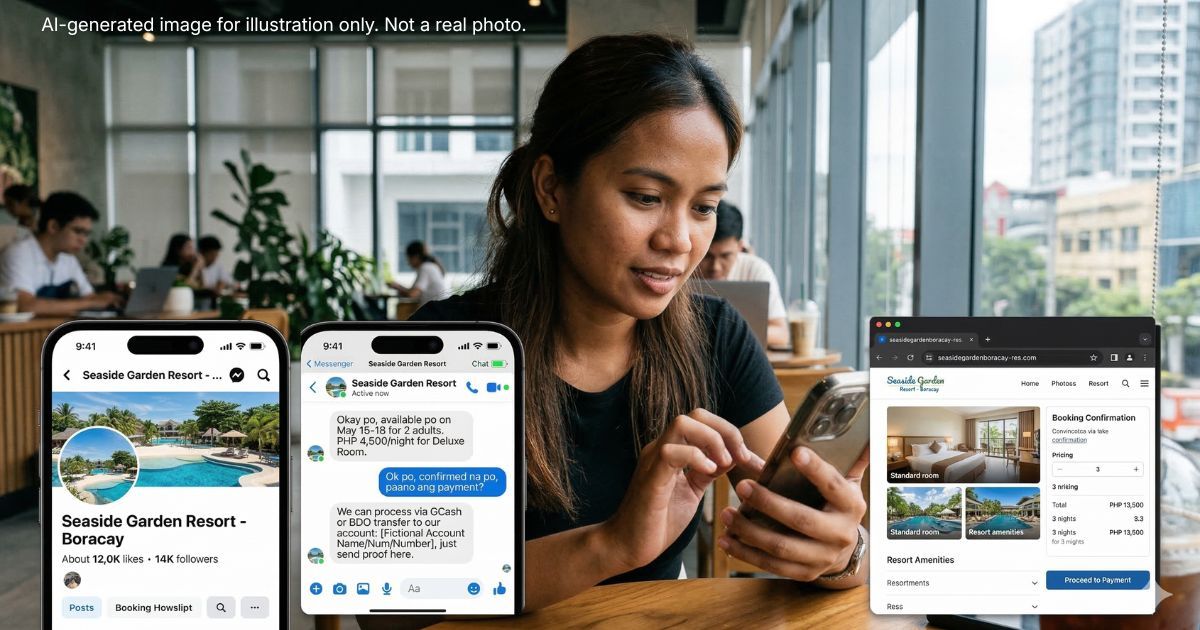
Hotel booking scams in the Philippines usually do not look obviously fake anymore. They often use copied photos, believable pricing, active chat replies, and pages with enough likes or followers to look legitimate. The scam works because the guest feels reassured long before payment happens.
According to SunStar’s Cebu report on efforts to protect bookings, scammers clone pages using real images and logos, demand upfront payments, and disappear after collecting deposits. SunStar’s Bantayan report adds an important detail: many of these scams use normal-looking rates, not just suspiciously cheap deals, which makes them harder to spot. InsiderPH’s Cebu report also says victims were paying through personal e-wallets or bank accounts and only discovered the fraud when they arrived and found out their reservation did not exist.
The key point is that these scams are often realistic, not absurd. The page may look active. The chat may feel responsive. The price may look reasonable. That is why this problem cannot be solved by telling guests to avoid only “too good to be true” offers.
Why do guests lose trust so quickly after one suspicious booking flow?
Guests lose trust fast when they cannot clearly verify three things: they are talking to the real property, they are paying the real business, and their booking is tied to actual room availability. If even one of those checks feels weak, the whole reservation starts to feel unsafe.
That trust damage spreads beyond one victim. When scam stories circulate, honest hotels and resorts also pay the price. Guests become slower to send deposits, more likely to ask repeated verification questions, and more hesitant to trust Facebook-first booking flows at all. That is exactly why Cebu tourism groups have been pushing travelers toward verified establishment lists and stronger anti-scam measures.
This is the part many small properties miss: guest trust does not break only when a scam happens. It also breaks when the real booking process feels too similar to a scammer’s process.
Why manual Facebook and Messenger bookings increase hotel booking scam risk
Manual booking is not automatically unsafe. Many small properties still rely on it because it is familiar, low-cost, and easy to start. The problem is that manual Facebook and Messenger booking creates too many weak points at once.
A guest asks if a room is available. A staff member replies when they can. Rates are sent in chat. Payment instructions are shared manually. The guest sends proof of payment. Someone checks it later. The booking is confirmed in another message. Each step may feel manageable to the business, but to the guest it can feel fragmented, inconsistent, and hard to verify.
That fragmentation creates normal operating problems too. Manual DM workflows can lead to missed inquiries, delayed replies, booking confusion, and double-booking pressure during peak periods. It also makes the legitimate booking process feel too similar to a scammer’s playbook: chat first, payment details later, confirmation after follow-up. That is where guest trust starts to break.
What does a safer booking and payment workflow look like?
A safer workflow makes verification easy. The guest should be able to see the real property, check real availability, pay through a payment flow tied to the business, and receive an automatic confirmation that matches the reservation. The fewer manual handoffs and typed payment details involved, the safer the process feels.
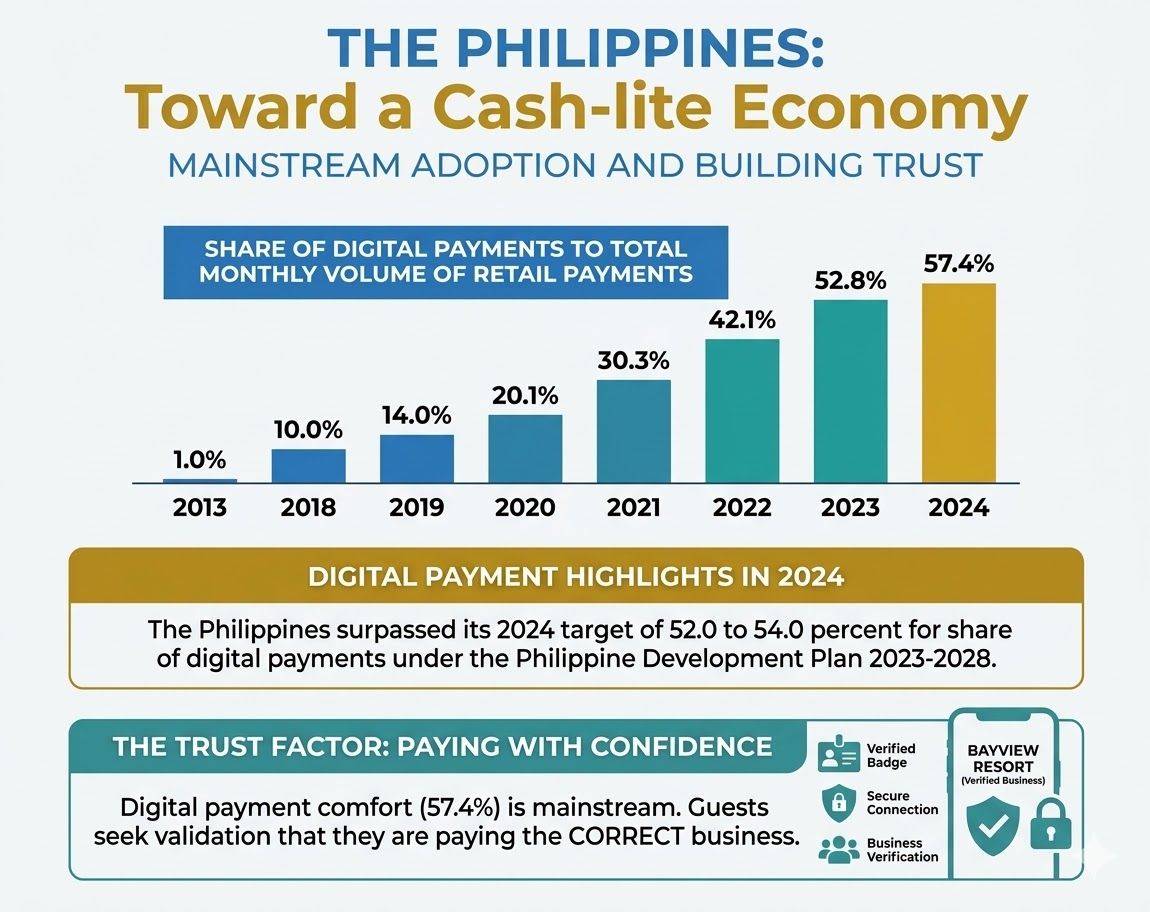
This matters even more now because digital payments are already mainstream. The BSP’s 2024 e-payments measurement says digital retail payments accounted for 57.4% of total monthly retail payment volume in 2024. Guests are already comfortable paying digitally. What they need is confidence that they are paying the right business.
The weak point in manual transfers is simple: the sender still carries much of the verification burden. GCash’s transfer guide says users enter the account name and account number, then review the details before confirming. BSP Circular No. 1213 says financial institutions should have ways to help users verify the recipient of a fund transfer. Put simply, guests still need a clear chance to confirm who they are paying, and manual payment instructions sent through Messenger or DMs make that harder than it should be.
We have seen the same payment logic confuse real users: a guest may focus on the hotel name mentioned in chat, then move too quickly through the transfer steps without paying enough attention to the final receiving details. That does not prove every app behaves the same way, but it does show why typed payment instructions inside Messenger are a weak trust layer. A safer payment flow should make business identity clear before money is sent.
A QR code helps with one part of the problem, but not all of it. BSP’s QR Ph FAQ says QR Ph reduces errors from manual encoding of account information, which is useful because fewer typed details means fewer input mistakes. But a QR code can still be abused if it is shared by a fake page or impersonator account. The real trust layer comes from the official channel and the payment screen itself, not from the QR image alone.
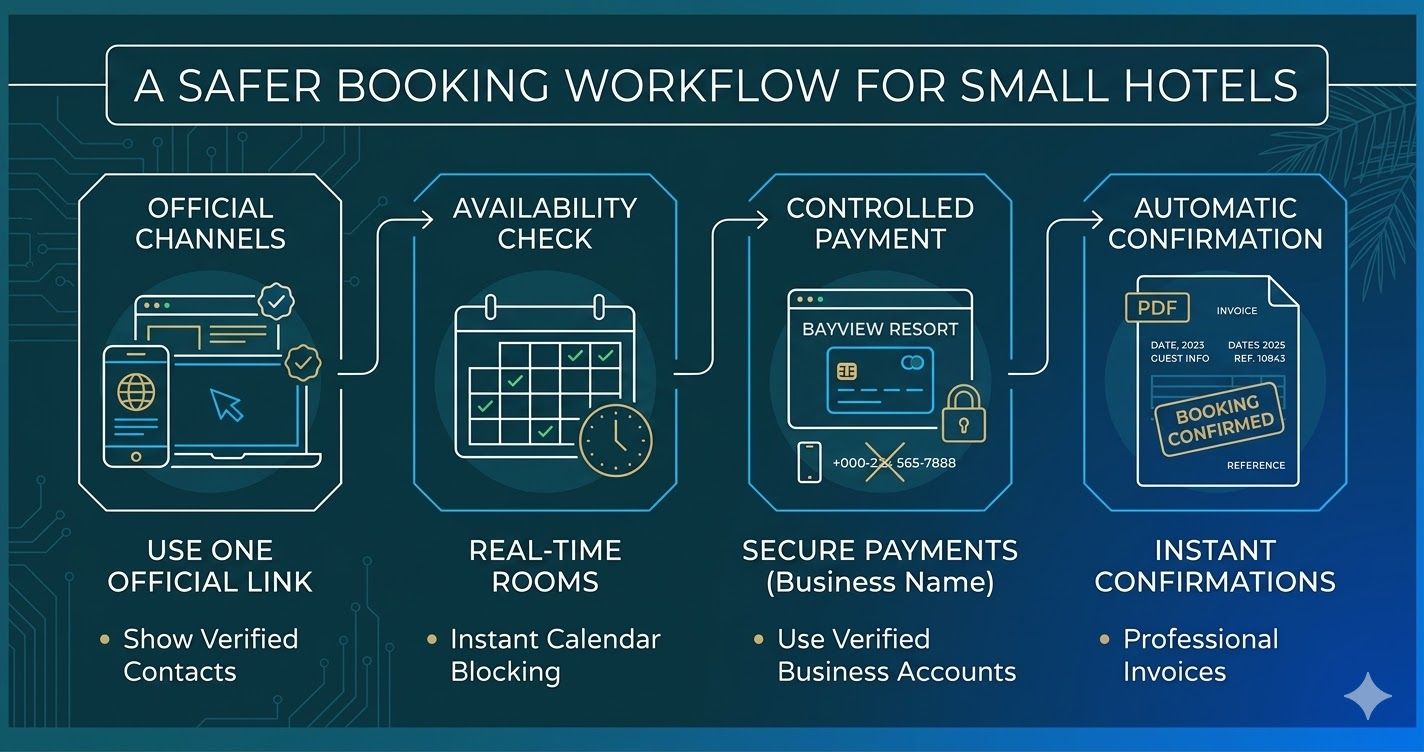
That is why a safer booking flow is not just about accepting digital payments. It is about using a controlled payment flow that helps the guest verify the business before sending money. This is where BrainBot Stayfront’s secure hotel reservation system fits more naturally. It combines real-time room checks, automatic calendar blocking, instant confirmations, and PDF invoices in one booking flow.
What small hotels and resorts can do right now
Small properties do not need to rebuild everything overnight. But they do need to remove the parts of the booking process that feel vague, inconsistent, or easy to fake.
Start here:
- Publish one official booking path. Put your official page, website, and contact details in one place so guests know which channels are real.
- Stop posting personal payment instructions in public-facing places. Screenshots and copied messages are easy to reuse in fake pages.
- Standardize your payment verification message. Tell guests what they should see before paying, including the official business name and what confirmation they should expect after payment.
- Send confirmations fast. A real booking should trigger a clear confirmation with dates, guest details, property name, amount paid, and a reference number.
- Use one system for inquiry, availability, payment, and confirmation. The more steps you split across chats, screenshots, and delayed staff replies, the more risk you create.
Even if a property is not ready for a full booking system today, it should at least tighten its messaging, confirmation process, and payment instructions. But once you want one workflow that handles room inquiries, availability, verified payment, and branded confirmations in one place, it makes sense to move toward a real digital front desk. That is where Stayfront and Iuvare AI Payments connect naturally. They are not just about automation. They are about making direct booking easier to trust.
Conclusion
Small hotels and resorts in the Philippines do not need louder promises. They need a safer booking workflow.
That means helping guests verify they are talking to the real property, paying the real business, and receiving a real reservation tied to actual availability. When that process is unclear, guest trust drops fast. When it is clear, trust grows before the guest even arrives.
If your team is still handling reservations through scattered chats, manual payment instructions, and delayed confirmations, now is the right time to clean that up. Start your 7-Day Free Trial + Get Assisted Setup with BrainBot Stayfront, or contact the team for guided help. The goal is simple: protect your guests, protect your brand, and make direct booking feel safe again.
Frequently Asked Questions
How can guests verify if a hotel or resort booking page is real?
Guests should check the property’s official website or official contact page, confirm that the booking link matches the real business, and verify that the payment step clearly shows the property’s business identity before sending money.
Is paying a personal GCash or bank account a red flag for hotel bookings?
It can be. Recent Cebu reporting shows scammers often collect money through personal e-wallets or bank accounts, especially through fake Facebook pages, so guests should treat that as a reason to verify more carefully.
Why do Facebook and Messenger bookings create more scam risk?
Because they are easy to fake and easy to fragment. A guest may see one page, talk to another account, receive payment instructions in chat, and wait for confirmation later. That creates too many points where trust can break.
Does using a QR code automatically make hotel payments safe?
No. QR can reduce manual entry errors, but it can still be abused if it comes from a fake page or impersonator. The safer setup is a QR or payment link delivered through the property’s verified official channel, with a payment screen that clearly shows the business identity.
Do small hotels need a full booking system to reduce booking scams?
Not always at the start. But they do need a clear and consistent workflow. As booking volume grows, one system for inquiries, availability, payment, and confirmation becomes much safer than managing reservations through manual chat.